Perth's Leading Specialist in the Treatment of Varicose Veins
Dr Luke Matar | MBBS, FRANZCR, FACP

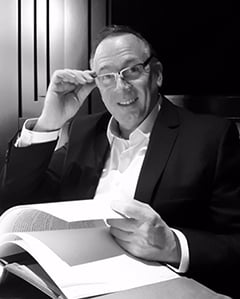
Dr Luke Matar
Varicose Vein Specialist Perth
Specialist Radiologist/Phlebologist | Published Researcher | International Conference Speaker
With over 25 years’ experience as a Specialist Radiologist and 15 years practising in Phlebology (Vein care), Dr Matar is highly experienced in venous imaging and all aspects of minimally invasive varicose vein treatment, having performed in excess of 2,000 EVLA procedures and 20,000 ultrasound-guided injections across his career.
His practice is dedicated exclusively to the diagnosis and treatment of superficial venous reflux and its associated conditions, including:
- Varicose veins
- Venous reflux / Chronic venous insufficiency
- Restless legs associated with venous disease
- Superficial venous thrombosis
Alongside his clinical practice, Dr Matar contributes to the advancement of phlebology through peer-reviewed research, scientific publications and presentations at national and international conferences.
About Dr Luke Matar
Varicose veins have been a personal problem for Dr Matar, his father and his sisters.
As someone who has personally suffered from varicose veins, Dr Matar understands first-hand the impact that aching, restless, heavy and uncomfortable itchy legs can have on daily life.
His experience as both doctor and patient drives a commitment to vein treatment done well — not just an alternative to vein-stripping surgery, but the right technique for each patient, performed with meticulous attention to detail. Despite being an early adopter of cyanoacrylate (glue) closure and co-author of the national consensus on its use, Dr Matar now choses endovenous laser ablation as his first-line treatment based on the outcomes he has seen and emerging evidence in the literature. He audits his own results and continually refines his techniques in light of that data, the latest research, and dialogue with leading vein specialists in Australia and overseas.
My Approach as a Doctor For Varicose Veins
“ My philosophy is simple: I offer patients the treatment I would choose for my own family, friends, or myself — aiming for the best possible outcome with the least discomfort and downtime. Not all treatments are equal: matching the right technique to each patient, and close attention to detail and individual factors, are what determine the result and the long-term outcome ” – Dr Luke Matar
Why Choose Dr Matar as Your Varicose Vein Specialist
Highly Specialised and Innovative Techniques
Dr Matar has adopted and refined several advanced treatment approaches
These include:
- Introducing single use radial fibres for laser treatment for varicose veins which increase patient comfort and facilitate faster recovery.
- Perforator vein ablation which replaces the need for surgical ligation of perforator veins.
- Nitrogen-free foam sclerotherapy to improve patient safety and reduce side effects.
- Pioneering the advanced technique of ambulatory phlebectomy done under ultrasound-guidance to ensure the most accurate and technically advanced vein removal.
- Extended laser ablation techniques to reduce reliance on phlebectomy and foam sclerotherapy for branch treatment.
Dr Matar’s extensive experience — in both diagnostic and procedural ultrasound and in vein treatment itself — supports a high level of precision throughout assessment, treatment and follow-up.
Trained by leaders in the field
Dr Matar has trained with experienced and internationally recognised vein doctors in Australia and overseas, regularly travelling interstate and abroad to learn from and exchange insights with established figures in the field.
His training in phlebology began in 2011 with UK phlebologist Professor Mark Whiteley, founder of The Whiteley Clinic and a pioneer of endovenous and perforator vein techniques. He went on to train with a number of other recognised vein specialists, including
- Professor Kurosh Parsi (NSW)
- The late Professor Ken Myers (VIC)
- Dr Mark Malouf (NSW)
- Dr Andrew Stirling (TAS)
- Dr Loius Loizou (VIC)
- Dr Chris Lekich (QLD)
- Dr Chris Ragg (Berlin)
- Dr David West (UK)
- Dr Ron Bush (USA)
For Dr Matar, vein treatment is also personal. Venous disease runs in his family, and he has been a patient himself — undergoing endovenous laser treatment on two occasions, as well as ambulatory phlebectomy and foam sclerotherapy. That first-hand experience shaped how he approaches treatment. Drawing on it, he developed a refined technique combining ultrasound-guided foam sclerotherapy with ambulatory phlebectomy — using ultrasound guidance through both the treatment and vein-removal stages — which he termed ultrasound-guided foam phlebectomy (UGFP) and presented at The College of Phlebology International Veins Meeting in London in 2017.
Dr Matar is committed to providing high-quality, individualised care, aimed at the best possible outcome for each patient. To that end he continually reviews and refines his treatments in light of new research, his own clinical outcomes, and the insights he gains from treating patients and from discussion with colleagues and mentors
He is undertaking research into the neglected and overlooked association between restless legs and varicose veins, he has spoken at national and international conferences and is a regular contributor to where he tries to educate other medical professionals as to the importance of venous disease and the modern treatments that can now be offered to alleviate suffering.
In addition to this, he regularly attends national and international conferences and liaises with leading international “opinion leaders”; he recently presented 5 original papers and was invited as a speaker on the topic of “Innovations in Vein Treatment” at the 2018 UIP meeting in Melbourne.
Advanced Vein treatment technology
At The Vein Clinic, Dr Matar uses modern, single-use radial-fibre laser systems for endovenous laser ablation.
Laser technology for vein treatment has advanced considerably. Earlier lasers used shorter wavelengths (around 810–980nm) that target haemoglobin in the blood, while current systems use longer, water-specific wavelengths delivered through radial-tip fibres rather than older bare-tip fibres. This generation of equipment is associated with less post-procedure pain and bruising and a more comfortable recovery.
When preparing foam for sclerotherapy, Dr Matar uses a nitrogen-free gas mixture (oxygen or carbon dioxide with oxygen) rather than room air. Room air is commonly used in many clinics, but the nitrogen it contains dissolves poorly in blood, whereas carbon dioxide and oxygen dissolve far more readily. Dr Matar makes his foam with a nitrogen-free (Oxygen or carbon dioxide and oxygen) mixture, which is more biocompatible and has been associated with fewer minor side effects such as transient visual disturbance. He adopts this as a precaution, particularly for patients with a history of migraine.
Why our treatment planning is different
Many clinics plan varicose vein treatment from a sonographer’s worksheet. Dr Matar works differently. As a radiologist as well as a phlebologist, he scans each patient himself at the planning stage — the live, three-dimensional view lets him assess what every vein segment needs and match the right technique to it, whether endovenous laser, ultrasound-guided foam sclerotherapy or phlebectomy. The same doctor who studies your anatomy on ultrasound is the one who plans and performs your treatment.
Research and Contributions to Vein Care
Dr Matar contributes actively to phlebology — the medical field dedicated to the diagnosis and treatment of vein disease — through research, publications and presentations at national and international meetings.
Dr Matar contributes actively to phlebology — the medical field dedicated to the diagnosis and treatment of vein disease — through peer-reviewed research, scientific presentations and conference leadership at national and international meetings.
Co-author — Cyanoacrylate Closure for Peripheral Veins: Consensus Document of the Australasian College of Phlebology
Published in Phlebology (2020). Dr Matar is one of 22 contributing authors of the Australasian College of Phlebology’s national consensus document on cyanoacrylate closure for peripheral veins, developed by phlebologists from across Australia and New Zealand to provide evidence-based recommendations for clinical practice.
- Journal: Phlebology, Vol. 35, Issue 3, pp. 153–175
- Published April 2020 (Epub August 2019)
- PMID: 31368408
- DOI: 10.1177/0268355519864755
XVIIIth UIP World Congress of Phlebology — Melbourne, 2018
Hosted by the International Union of Phlebology and the Australasian College of Phlebology.
Presentations (accepted abstracts):
- Ultrasound-Guided Foam Phlebectomy (UGFP)
- Ultrasound Appearances Following Cyanoacrylate Adhesive Closure
- Direct Injection of Cyanoacrylate Adhesive into Perforators (DICAP)
- Modified VenaSeal™ Techniques
- Treatment of Venous Aneurysms Following Failed EVLA
Invited and leadership roles:
- Invited session — Innovations to Improve Phlebectomy, Surface Procedures and Perforator Closure
- Moderator — New Technologies II
- Chairperson — Thoracoabdominal Veins Session
The College of Phlebology International Veins Meeting — London, 2017
Hosted by The College of Phlebology.
Speaker:
- Ultrasound-Guided Foam Phlebectomy (UGFP)
Australasian College of Phlebology Presentations
ACP Annual Scientific Meeting — 2026
Hosted by the Australasian College of Phlebology.
Presented:
- Foam Sclerotherapy: The Main Driver of Intramuscular Venous Thrombosis (IMVT) in Multimodality Outpatient Phlebology — Lessons from 1,574 Consecutive Procedures in 388 Patients
ACP Annual Scientific Meeting — Fiji, 2024
Hosted by the Australasian College of Phlebology.
Faculty member. Presentations:
- Venous Incompetence Treatment and Restless Leg Syndrome
- Cyanoacrylate Embolisation Complications
- Vein Ablation Trends in Western Australia
- Superficial Venous Thrombosis in the Post-COVID Era
Moderator — Diagnostic Imaging and Interventional Radiology Session
ACP Annual Scientific Meeting — 2021
Hosted by the Australasian College of Phlebology.
Presented:
- Restless Leg Syndrome: An Underdiagnosed Disease Waiting for Phlebologists to Find and Treat
Clinical Areas of Interest
Dr Matar has particular clinical and research interests in:
- Endovenous Laser Ablation
- Ultrasound-Guided Foam Sclerotherapy
- Ultrasound-Guided Foam Phlebectomy (UGFP)
- Chronic Venous Insufficiency
- Perforator Vein Disease
- Restless Legs Syndrome and Venous Disease
- Superficial Venous Thrombosis (SVT)
- Intramuscular Venous Thrombosis (IMVT)
- Venous Aneurysm Management
- Cyanoacrylate Closure (VenaSeal™)
Clinical Areas of Interest
Dr Matar has particular clinical and research interests in:
- Endovenous Laser Ablation
- Ultrasound-Guided Foam Sclerotherapy
- Ultrasound-Guided Foam Phlebectomy (UGFP)
- Chronic Venous Insufficiency
- Perforator Vein Disease
- Restless Legs Syndrome and Venous Disease
- Superficial Venous Thrombosis (SVT)
- Intramuscular Venous Thrombosis (IMVT)
- Venous Aneurysm Management
- Cyanoacrylate Closure (VenaSeal™)
Dr Matar’s Research on Restless Legs
Dr Matar has a particular research interest in the link between venous disease and restless legs syndrome (RLS) — an association that remains under-recognised. In a prospective study of nearly 500 patients treated at the clinic, presented at the Australasian College of Phlebology Annual Scientific Meeting in 2024, restless legs symptoms were found in around two-thirds of patients undergoing treatment for venous reflux, with half of the treated group in the moderate-to-severe range. Following treatment, around 90% of these patients improved to a lower severity category within six weeks. These findings — one of the largest prospective series of their kind — add to a growing body of published research linking restless legs to treatable venous reflux. Dr Matar continues to work towards wider recognition of this link, in both the medical community and the broader public.
To learn more, see our page on restless legs syndrome.
A Personal Story – From Our Director Dr Luke Matar
My strong interest in treating varicose veins is very personal. As many of you will know, varicose veins tend to be hereditary. If both parents have varicose veins, there is an almost 90% chance you will also have them.
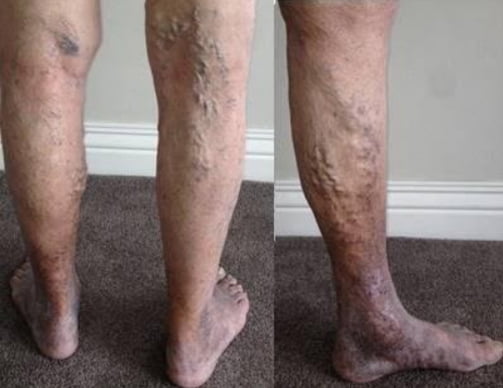
I was acutely aware of the potential consequences of untreated venous disease simply by looking at my father’s legs. These pictures taken in Jan 2014 show the consequences of long-term untreated venous disease (AKA venous incompetence, reflux, or dysfunction) and associated varicose veins.
My father suffered his whole adult life with itchy, uncomfortable, and painful legs. He had recurrent episodes of superficial thrombosis, venous ulceration, and avoided air travel for the last 30 years as it greatly exacerbated his symptoms. His legs became progressively stained, pigmented, and indurated as time went on.
The reason my father (an intelligent medical specialist) did not proceed with surgical stripping treatment (all that was available at the time) was because he believed “the treatment is worse than the disease”. He had seen and assisted in the old- fashioned stripping of veins, something he referred to as a “medieval operation” and did not want to undergo the surgery or associated long recovery. Like many men, he decided he would rather “soldier on” than get treatment. When I look back on the treatments available to him, I can understand his decision!
In my 30s I too started developing all the symptoms my father had at this age. In my 40s the disease progressed, and my legs were frequently itchy, uncomfortable, and restless. When I consulted a vascular surgeon for help, I was told “they’re not bad enough to worry about, come back and see us in another 10 years!” This is when I decided there had to be a better way.
My research led me to discover that endovenous laser ablation (EVLA) was the most modern and effective treatment available. I sought the help of recognised world expert Dr Mark Whiteley of The Whiteley Clinic in the UK who had introduced the EVLA technique to England, to be my mentor. I was so impressed with Mark that after training with him, I had him personally treat my own veins.
Since this time, I have been travelling extensively interstate and overseas to learn further advanced techniques from other international and national experts in the field of phlebology (vein medicine).
The modern treatment of varicose veins is founded on a solid understanding of venous ultrasound and technical skill in performing ultrasound-guided procedures. As a specialist Radiologist with over 20 years’ experience in diagnostic ultrasound and ultrasound-guided procedures, along with a personal interest in the field, the transition to endovenous treatment of varicose veins has been a natural one for me.
I am committed to providing the most effective and minimally invasive therapies to patients so that they may avoid the disabling consequences of venous incompetence and varicose veins that my father suffered.
I am excited to be able to offer these world-class treatments to my patients in a purpose-built clinic that is focused on optimal outcomes and maximal patient comfort. Patients no longer need to fear the consequences of surgical treatment or untreated venous reflux.
Unfortunately, my father was too late to benefit from the remarkable technological advances in vein treatment that I am now able to offer but I hope to spare many patients the discomfort and suffering of this disease that is often overlooked and misunderstood by the public and medical professionals alike.
Get In Touch
Please send us an email and we’ll be in contact very soon or alternatively, call us on (08) 9200 3450.
If you are unsure of what vein condition you may have, assess your legs with our online tool.
If you are looking for cosmetic spider vein treatment only, please click here.